
When forest history reveals biodiversity
Botanical surveys and decades of aerial imagery to understand how the history of forest management shapes today's understorey plant communities.
Combining vegetation surveys, historical aerial imagery and canopy height models to study the long-term effects of forest management on understorey flora.
Understanding the past to explain today's flora
The aim of the project was to assess whether the history of forest management still influences the composition of understorey plant communities today, and to identify species that could serve as indicators of that history.
Linking fieldwork and aerial archives
Field vegetation surveys were compared with the history of forest structure, reconstructed from historical aerial imagery.
Reconstructing several decades of forest dynamics
Canopy height models were reconstructed for the period from the 1950s to 2020. This approach combines historical aerial imagery with current data and a model trained on contemporary images and reference height models.
Linking forest and biodiversity
Current plant communities were then related to past changes in canopy height, to identify species likely to serve as indicators of forest management history.
A project at the interface of plant ecology, historical data, spatial analysis and artificial intelligence, revealing the links between forest trajectories and biodiversity.
Do you have a similar project?
Tell us about your context: we reply within two working days.
Other projects
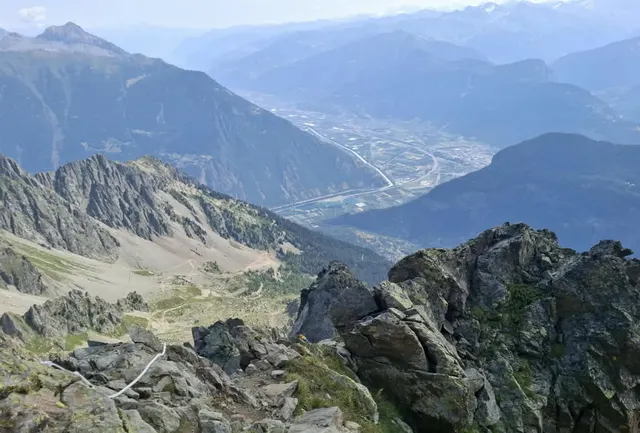
A century of change in alpine flora 2026
A century after the surveys of botanist Denis Coquoz, seven high-altitude sites in the Vallée du Trient Regional Nature Park were revisited to measure how their flora has changed.
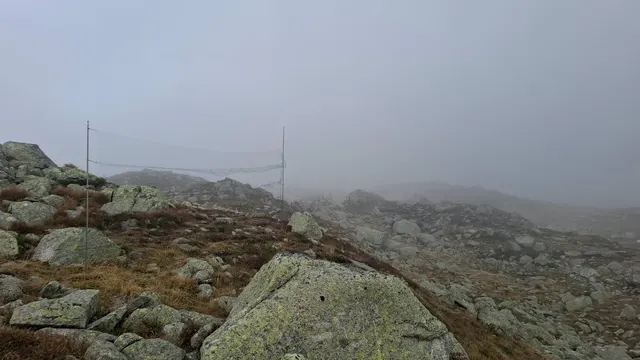
At the heart of alpine migration 2026
Monitoring of migrating birds and raptors at the Pfitscher Joch in Tyrol, combining observation, scientific marking and monitoring.
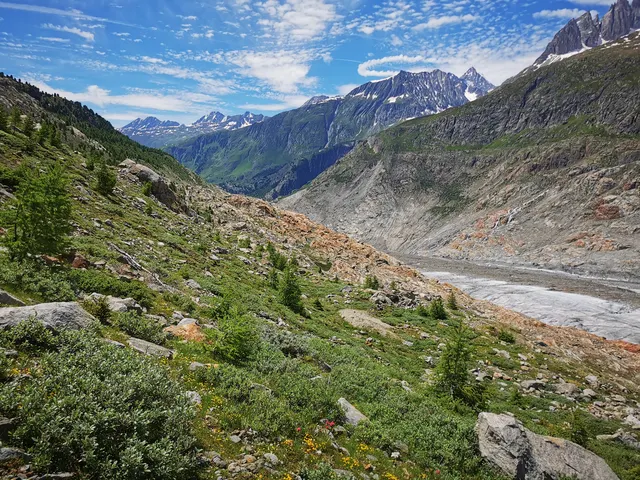
Eight decades of vegetation at the edge of the Aletsch Glacier 2026
Archives since 1943, surveys repeated in 2024 and aerial photographs analysed with deep learning: reconstructing vegetation change at the edge of the largest glacier in the Alps.